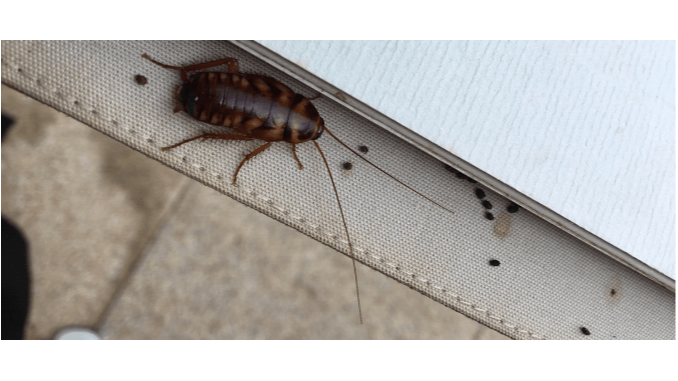
ORLANDO, FL — Few household discoveries trigger alarm faster than spotting what looks like coffee grounds scattered across a kitchen counter or pepper-like specks lining a pantry shelf. In most Florida homes, those aren’t kitchen spills. They’re cockroach droppings — and they’re often the clearest early warning of a growing infestation.
ABC Home & Commercial Services has published a complete identification guide on cockroach droppings for Orlando-area homeowners. The guide explains how to tell species apart by their droppings, why those droppings matter for family health, and when sightings warrant professional treatment.
Key Takeaways
- Cockroach droppings vary by species: German roach frass resembles coarse coffee grounds, while American (palmetto bug) droppings are larger, cylindrical, and ridged.
- Droppings often appear weeks before live roaches are seen, making them one of the most reliable early infestation signals.
- Cockroach allergens — from droppings, shed skins, and saliva — are documented asthma triggers, particularly in children.
- Concentrated droppings indicate harborage, a nesting site that requires targeted treatment rather than surface sprays.
- DIY cleanup can spread allergens; vacuum with a HEPA filter and treat the source professionally for lasting results.
What Cockroach Droppings Look Like by Species
The most common indoor roach in Orlando homes is the German cockroach, a small, light-brown species roughly half an inch long. Its droppings are tiny — about the size of ground pepper — and dark brown or black. Residents typically find them along baseboards, inside silverware drawers, under sinks, and behind appliances. A heavy German roach infestation can leave smear marks (dark, irregular streaks) on vertical surfaces in addition to scattered droppings.
The American cockroach, known locally as the palmetto bug, leaves a very different calling card. These droppings are roughly the size of mouse pellets, cylindrical, with blunt ends and visible ridges running lengthwise. The size confusion is common, but mouse droppings taper to a point at one or both ends.
Oriental cockroaches produce droppings similar in size to American roaches but typically darker, and clustered in damp areas like utility rooms and storage spaces.
Why Cockroach Droppings Matter for Health
Cockroach droppings aren’t just unpleasant — they carry documented public health risks. The U.S. Environmental Protection Agency and the Centers for Disease Control and Prevention have both identified cockroach allergens as significant asthma triggers, particularly in children living in humid climates. Those allergens originate from droppings, shed skins, saliva, and decomposing roach bodies, and they become airborne whenever the residue is disturbed.
For households with children, elderly family members, or anyone with respiratory conditions, visible droppings should be treated as a health priority, not a cleaning chore.
Where Droppings Tend to Concentrate
Heavy dropping accumulation almost always points to harborage — a nesting site where roaches rest, breed, and shelter. Common harborage zones in Orlando homes include:
- Behind and beneath refrigerators, dishwashers, and ovens
- Inside cabinet hinges, drawer joints, and pantry shelving
- Around plumbing penetrations under sinks and behind toilets
- Within wall voids near electrical outlets and switch plates
- In garages, particularly around recycling bins and pet food storage
Finding droppings in one concentrated area means the colony is established nearby. Scattered droppings across multiple rooms suggest a mature, dispersed population that has been present for some time.
What to Do Next
Cleaning droppings is the right first step, but it shouldn’t be the only step. Vacuum with a HEPA-filter vacuum to capture allergens, then wash hard surfaces with soap and water followed by a household disinfectant. Avoid sweeping or dry-dusting, which sends allergens airborne.
For lasting control, professional Orlando cockroach exterminator services target the harborage rather than the visible activity. QualityPro-certified technicians inspect for species identification, locate nesting sites, apply species-appropriate treatments, and seal entry points to prevent reinfestation. The team has served the Central Florida market with comprehensive Orlando pest control coverage since 2006.
Frequently Asked Questions
Q: How can someone tell cockroach droppings from mouse droppings? Cockroach droppings have blunt, rounded ends with visible ridges running lengthwise. Mouse droppings taper to a sharp point at one or both ends. American roach droppings are most often confused with mouse pellets because of their similar size.
Q: Do cockroach droppings smell? Heavy infestations produce a musty, oily odor that comes from a combination of droppings, pheromones, and decomposing insects. The smell often intensifies in warm, enclosed spaces such as cabinets and pantries.
Q: Can cockroach droppings make people sick? Yes. Cockroach allergens — found in droppings, saliva, and shed skins — are documented asthma triggers, particularly in children. The allergens become airborne when residue is disturbed, which is why HEPA-filter vacuuming is recommended over sweeping.
Q: How quickly do droppings accumulate? A single German cockroach can produce dozens of droppings per day. In a mature infestation of several hundred insects, droppings can accumulate visibly within 24 to 48 hours in heavily used harborage areas.
Q: Does finding droppings always mean there is an active infestation? Fresh, moist-looking droppings indicate active feeding. Old, dry, dusty droppings may be from a population that has already moved or been treated, but professional inspection is the only way to confirm whether the colony is still present.
Q: Are palmetto bug droppings dangerous to pets? Pets that ingest droppings can be exposed to bacteria carried by roaches, including Salmonella and E. coli strains. Veterinary attention is advised if a pet is observed eating droppings or dead roaches.
Q: Why are roaches so common in Orlando homes? Florida’s warm, humid climate supports year-round roach activity. Palmetto bugs thrive outdoors in mulch and tree canopies, entering homes through plumbing gaps and weather stripping. German roaches typically enter via grocery bags, used appliances, or cardboard.
Content development supported by national digital marketing agency Astoundz.
ABC Home & Commercial Services Orlando
823 East Colonial Drive
Orlando
Florida
32803
United States