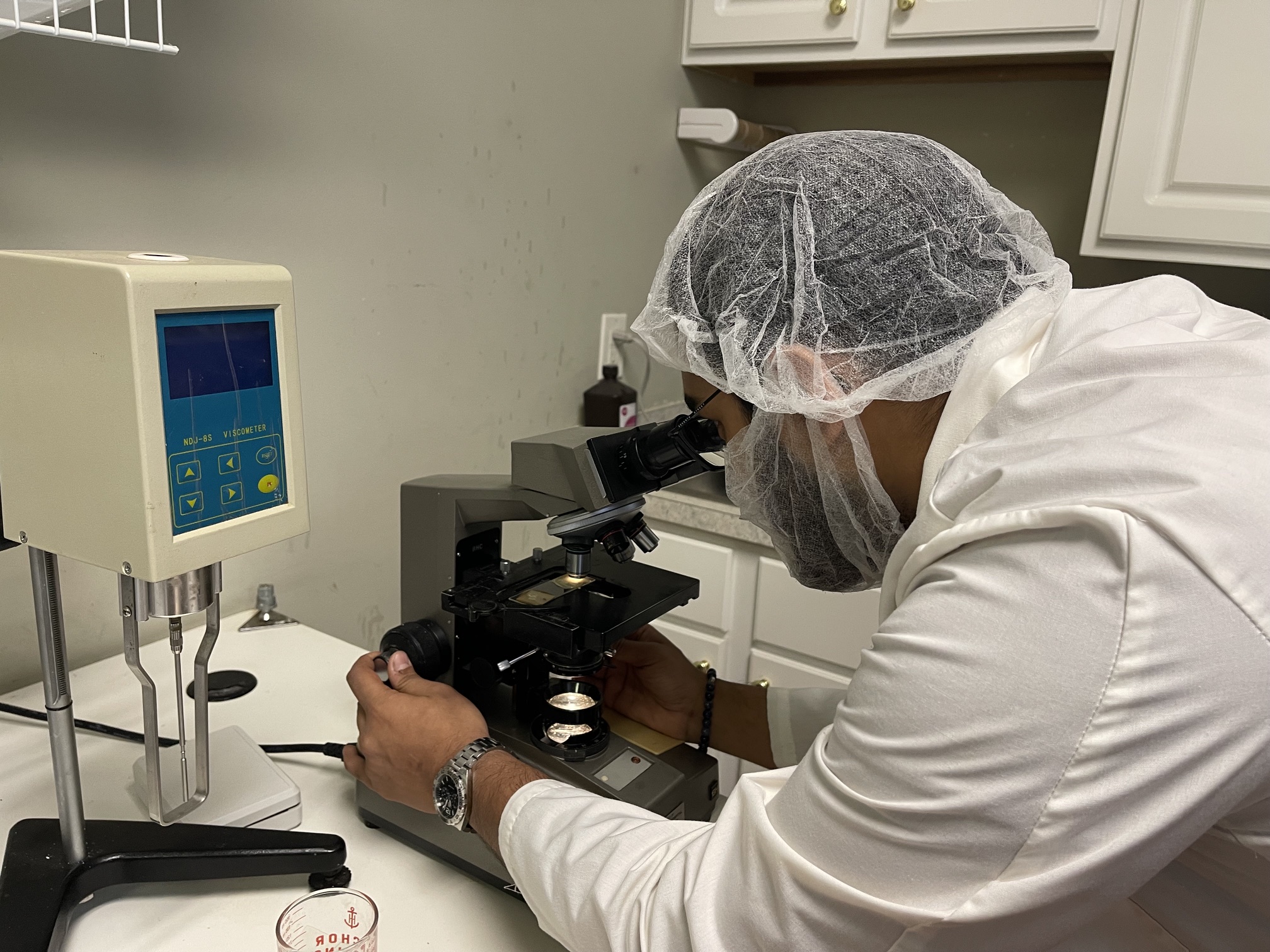
Molecular biologist and OM Botanical founder Sudhir Shah explains why microbiome-friendly skincare, skin barrier repair and balanced formulations are important
RALEIGH, NC, UNITED STATES, September 2, 2026 /EINPresswire.com/ — As “microbiome-friendly skincare” becomes one of the fastest-growing conversations in beauty and cosmetic science, OM Botanical is calling for greater transparency and scientific rigor in how brands communicate about the skin microbiome, skin barrier health and microbiome-conscious skincare formulations.
Founded by molecular biologist and Ayurvedic researcher Sudhir Shah, OM Botanical has released a comprehensive educational guide explaining the emerging science behind the skin microbiome and why consumers should look beyond individual ingredients when evaluating microbiome-friendly skincare products.
The company says the rapidly growing interest in the skin microbiome represents an important shift in skincare—from simply treating visible skin concerns to understanding the skin as a living biological ecosystem.
“The skin isn’t supposed to be sterile. It’s supposed to be balanced,” said Shah, Founder and Chief Scientist of OM Botanical.
“For years, consumers were taught that effective skincare meant removing more; more oil, more bacteria, more dead skin and more impurities. Modern skin science gives us a different perspective. Healthy skincare should respect the skin barrier and the ecosystem that exists on the skin.”
THE RISE OF MICROBIOME-FRIENDLY SKINCARE
The **skin microbiome** is a diverse community of microorganisms living on the surface of the skin. These microorganisms interact with the skin barrier and the surrounding biological environment.
Scientific interest in **microbiome skincare** has grown rapidly, with researchers investigating how cosmetic ingredients and finished formulations may affect the skin’s microbial ecosystem.
A 2026 review of microbiome-targeted cosmetics concluded that the field shows promise but remains an emerging area of research, with differences in study design, limited clinical evidence and a lack of standardized criteria for defining “microbiome-friendly” cosmetics.
For consumers, this creates an important question:
“What actually makes skincare microbiome-friendly?”
According to OM Botanical, the answer cannot be reduced to a single ingredient.
MICROBIOME-FRIENDLY SKINCARE IS ABOUT THE WHOLE FORMULATION
OM Botanical encourages consumers to look beyond marketing claims such as “probiotic,” “prebiotic,” “fermented,” or “microbiome-friendly” and consider the complete formulation.
Important considerations include:
* Skin-friendly formulation pH
* Cleansing strength and surfactant selection
* Preservative systems
* Fragrance and essential-oil levels
* Ingredient concentrations
* Frequency of product use
* Skin barrier support
* Overall formulation compatibility
* Scientific evidence supporting microbiome-related claims
“Putting the word ‘microbiome’ on a product label doesn’t automatically make the product microbiome-friendly,” Shah said.
“The science is much more complicated. We need to look at the finished formulation and how all of its components interact with the skin.”
PREBIOTICS, PROBIOTICS AND POSTBIOTICS: WHAT’S THE DIFFERENCE?
The growing popularity of microbiome skincare has introduced consumers to terminology that can be difficult to understand.
OM Botanical’s educational guide explains the differences between prebiotics, probiotics and postbiotics and emphasizes that these terms should not be used interchangeably.
A fermented botanical ingredient, for example, does not automatically make a cosmetic product a probiotic product.
Likewise, a botanical extract should not automatically be described as a prebiotic simply because it is plant-derived.
The company believes consumers should ask what evidence supports a microbiome-related claim rather than assuming that terminology alone demonstrates effectiveness.
WHY SKIN BARRIER REPAIR MATTERS
The growing interest in the microbiome is closely connected to another major skincare trend: skin barrier repair.
The skin barrier helps regulate hydration and protects the body from the external environment. When the barrier becomes compromised, skin can feel dry, tight, irritated or uncomfortable.
OM Botanical’s skincare philosophy places emphasis on maintaining a healthy skin barrier through gentle cleansing, hydration, nourishing plant oils, thoughtful formulation and consistent daily skincare.
The company’s current skincare routine follows four foundational steps:
**CLEANSE → TARGET → HYDRATE → PROTECT**
The approach is designed to simplify skincare while supporting the skin’s natural functions rather than continually adding stronger products or more steps.
RETHINKING “SQUEAKY CLEAN” SKIN
OM Botanical also challenges the long-standing beauty ideal that skin should feel extremely tight or “squeaky clean” after cleansing.
A cleanser that removes everything from the skin may not necessarily be the best cleanser for maintaining comfortable, balanced skin.
The company advocates for **gentle face cleansing** that removes dirt, excess oil, sunscreen and daily buildup without unnecessarily stripping the skin.
OM Botanical’s Complete Face Cleanser, for example, is an aloe-based, non-foaming cleanser designed to cleanse without leaving skin feeling tight or stripped.
AYURVEDIC SKINCARE MEETS MODERN SKIN SCIENCE
OM Botanical combines **Ayurvedic skincare** principles with modern formulation science.
Shah’s background in molecular biology and ayurvedic research informs the company’s approach to evaluating ingredients and finished formulations, while his study of Ayurveda influences the company’s emphasis on balance and botanical ingredients.
“Modern microbiology and Ayurveda are different disciplines,” Shah said. “We don’t claim they are the same. But Ayurveda has long emphasized balance rather than constantly fighting the body. That philosophy can provide an interesting foundation for thinking differently about skincare.”
OM Botanical’s approach focuses on plant-based formulations designed to work with the skin rather than continually overcorrecting it.
FROM NATURAL SKINCARE TO BIOLOGY-BASED SKINCARE
OM Botanical believes the future of **natural skincare** will increasingly involve a deeper understanding of skin biology.
The company argues that the question should no longer simply be whether a skincare product is “natural” or “synthetic.”
Instead, consumers should ask:
**Does the formulation make sense for the biology of my skin?**
That includes considering the skin barrier, formulation pH, cleansing system, preservation strategy, active ingredients and how frequently a product is used.
“Natural doesn’t automatically mean microbiome-friendly, just as synthetic doesn’t automatically mean harmful,” Shah said.
“We need to move beyond simplistic labels and start talking about formulation science, evidence and how skincare actually interacts with living skin.”
OM BOTANICAL’S MICROBIOME-FRIENDLY SKINCARE APPROACH
OM Botanical develops plant-based **Ayurvedic skincare, natural skincare and skin barrier-supporting products** in small batches in its own facility in Apex, North Carolina.
The company’s skincare collection includes facial cleansers, moisturizers, serums, face oils, masks and mineral sun protection.
Its formulations incorporate ingredients such as aloe vera, tremella mushroom, niacinamide, botanical oils, plant extracts and fermented ingredients.
Rather than focusing exclusively on individual “hero ingredients,” OM Botanical says it evaluates how ingredients function together within the finished formulation.
The company’s ingredient philosophy emphasizes functional botanicals, plant oils, raw butters and modern formulation science. Its ingredient guide states that each ingredient is selected for a specific role within the finished formula.
A NEW WAY TO THINK ABOUT HEALTHY SKIN
The company believes the emerging microbiome conversation represents a broader change in consumer expectations.
Consumers are increasingly looking for **clean skincare, natural skincare, Ayurvedic skincare, microbiome-friendly skincare, barrier-supporting skincare and science-based beauty**—but they also want to understand what those terms actually mean.
“The future of skincare isn’t necessarily about doing more,” Shah said.
“It may be about understanding more.”
CONSUMER GUIDE
OM Botanical’s educational guide, “Microbiome-Friendly Skincare: How to Support Your Skin Barrier, Skin Microbiome & Healthy Aging,” provides an overview of:
* The skin microbiome
* Microbiome-friendly skincare
* Skin barrier health
* Skin barrier repair
* Prebiotics, probiotics and postbiotics
* Gentle cleansing
* Formulation pH
* Botanical skincare
* Ayurvedic skincare
* Healthy-aging skincare
* How consumers can evaluate microbiome-related marketing claims
The guide is available through the OM Botanical website.
ABOUT OM BOTANICAL
OM Botanical is a plant-based Ayurvedic skincare, haircare and body-care company founded by molecular biologist and Ayurvedic researcher **Sudhir Shah**.
The company combines Ayurvedic botanical knowledge with modern formulation science to create plant-based personal-care products in small batches in its own facility in Apex, North Carolina.
OM Botanical’s philosophy centers on balanced formulations, functional botanicals, skin barrier awareness, responsible ingredient selection and a “beyond natural and organic” approach to personal care.
For more information visit https//ombotanical.com
Sudhir Shah
OM Botanical
+1 919-629-8389
email us here
Visit us on social media:
Instagram
Facebook
TikTok
X
Legal Disclaimer:
EIN Presswire provides this news content “as is” without warranty of any kind. We do not accept any responsibility or liability
for the accuracy, content, images, videos, licenses, completeness, legality, or reliability of the information contained in this
article. If you have any complaints or copyright issues related to this article, kindly contact the author above.

Media gallery