
MANTECA, CA – September 02, 2026 – PRESSADVANTAGE –
High Quality Fence has released guidance for property owners on assessing fence stability following an exceptionally dry winter and a summer of sustained heat across California’s Central Valley. The company is directing attention to fence posts and footings rather than panels, where the effects of prolonged soil drying tend to appear first.
According to the U.S. Drought Monitor, January through March of 2026 was the driest year-to-date in 132 years of record for San Joaquin County, running roughly two inches below normal. Seasonal outlooks issued earlier in the year projected above-normal temperatures across California through August, and the National Weather Service has since recorded extended periods of triple-digit heat across the San Joaquin Valley, with overnight temperatures in some areas remaining in the mid-70s.
Soils mapped across much of the county include substantial clay and clay-loam content. Clay soils contract as moisture leaves the ground and expand again when it returns, and the scale of that movement corresponds to how much moisture was lost. A winter that delivered well below normal rainfall, followed by months of high daytime temperatures and limited overnight cooling, represents an unusually wide swing.
In fence construction, that movement acts on the concrete footing rather than on the fence above it. Soil that has pulled back from a footing no longer braces it, which is why a post can loosen well before any visible change appears at grade.
“A fence that looks fine in August is not necessarily a fence that is holding,” said Moises Flores, Owner of High Quality Fence. “The soil pulls back from the footing while everything above grade still looks square. What people notice is the lean, and by the time they notice it, the movement has already happened underground.”
Footing requirements in the Central Valley are calculated differently than in colder regions of the country. Where deep frost lines govern how far below grade a footing must sit, the valley’s shallow frost line shifts the controlling factors to soil movement and wind loading. Afternoon delta breezes place lateral pressure on tall solid fencing, and that pressure transfers directly to posts that have lost surrounding soil contact.
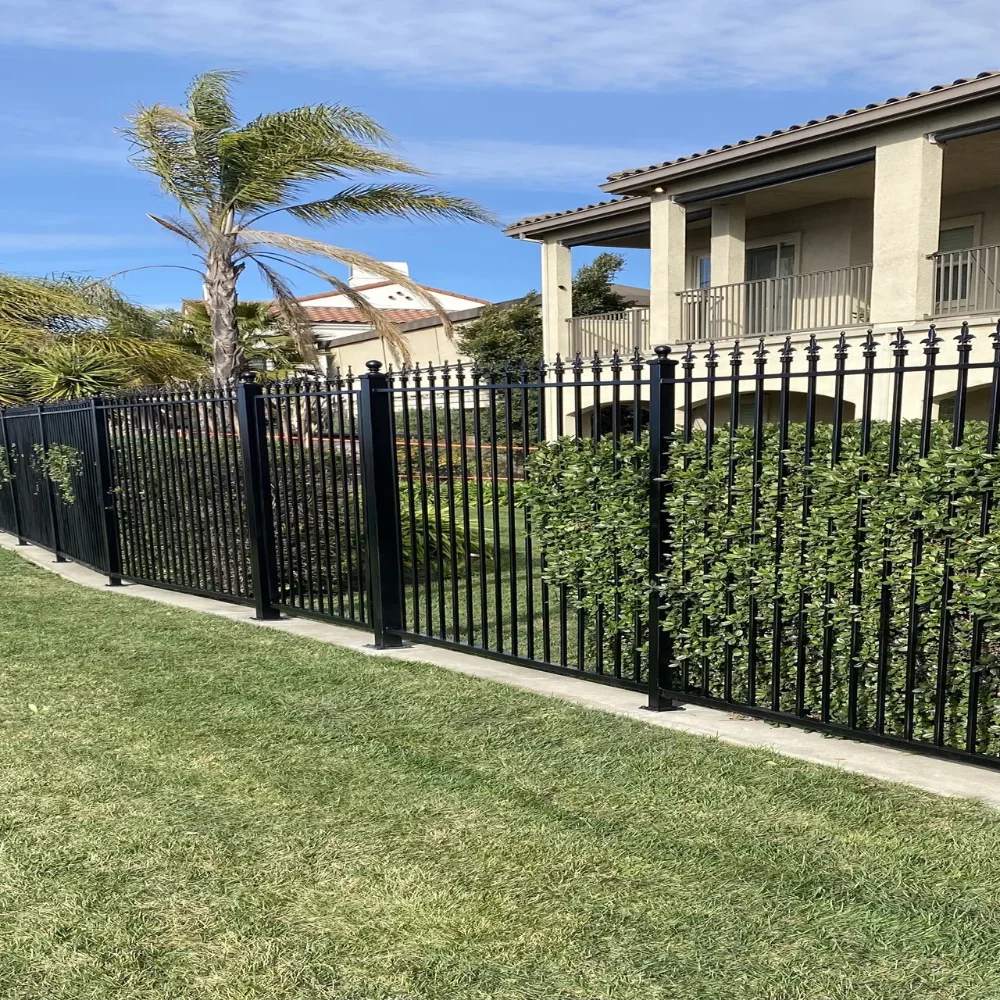
Material condition follows a separate timeline from structural movement. Untreated wood exposed to extended ultraviolet radiation tends to gray and develop surface checking as moisture leaves the grain, a process that staining and sealing are intended to slow. Powder-coated ornamental iron depends on the integrity of its finish, with chips and scratches serving as common starting points for surface corrosion.
Vinyl fencing expands and contracts measurably with temperature, which is why installation allowances within the rails affect long-term performance. Chain link systems rely on tension, and mesh that has slackened over a hot season places additional load on line posts and top rails.
Gates warrant separate attention because they concentrate weight on a small number of points. A gate post carries the full load of the frame and must resist twisting, so ground movement at that post produces visible symptoms sooner than movement elsewhere along a fence line. Automated gate operators depend on consistent alignment to function correctly, and a post that has shifted even slightly can affect how reliably a gate closes and latches.
Property owners can carry out a basic assessment without tools. Flores noted that pressure applied at the top of a post will reveal movement that is not visible from a distance, and that gate latches falling out of alignment are often the earliest sign that a frame has shifted. Posts that appear plumb from one direction but not another are an additional indicator.
“The gate tells you first,” Flores said. “It is the only part of a fence that moves every day, so it shows what the rest of the fence line is doing before anything else does. If a latch that used to line up no longer does, something under the ground has changed.”
The guidance arrives ahead of the region’s wet season, when soils that have contracted through summer begin to take on moisture and expand again. That reversal places renewed pressure on footings that have already lost contact with surrounding soil, and it is the point at which movement accumulated over a dry year commonly becomes visible.
Perimeter fencing on commercial and agricultural property faces the same conditions across longer runs with fewer windbreaks, which can distribute the effects unevenly along a single fence line.
High Quality Fence is a family-owned fence contractor serving San Joaquin, Stanislaus, Sacramento, and Contra Costa counties. The company installs and repairs wood, vinyl, chain link, and ornamental iron fencing, along with gates and gate operators, and holds California contractor license 1059161 in the C-13 fencing classification. Additional information is available at highqualityfence.com.
###
For more information about High Quality Fence, contact the company here:
High Quality Fence
Moises Flores
+12099294094
info@highqualityfence.com
1112 N Main St #171, Manteca, CA 95336, United States
Media gallery



