
MORRISON, CO – September 02, 2026 – PRESSADVANTAGE –
Colorado Custom Covers and Decks has outlined how alternating dry periods and concentrated rainfall affect the stability of deck footings in foothills terrain. The Deckorators Certified Elite builder and ProWood Ambassador is drawing attention to a structural factor that the Colorado Geological Survey identifies as the state’s most significant geologic hazard.
According to the Colorado Geological Survey, expansive or swelling soils cause more property damage in Colorado than any other natural hazard. The agency notes that soils containing bentonite and similar clay minerals expand when they take on water and shrink again as they dry out. The same material that lifts and pushes when saturated will contract and settle during a dry stretch, and the movement is capable of acting vertically, horizontally, or in both directions at once.
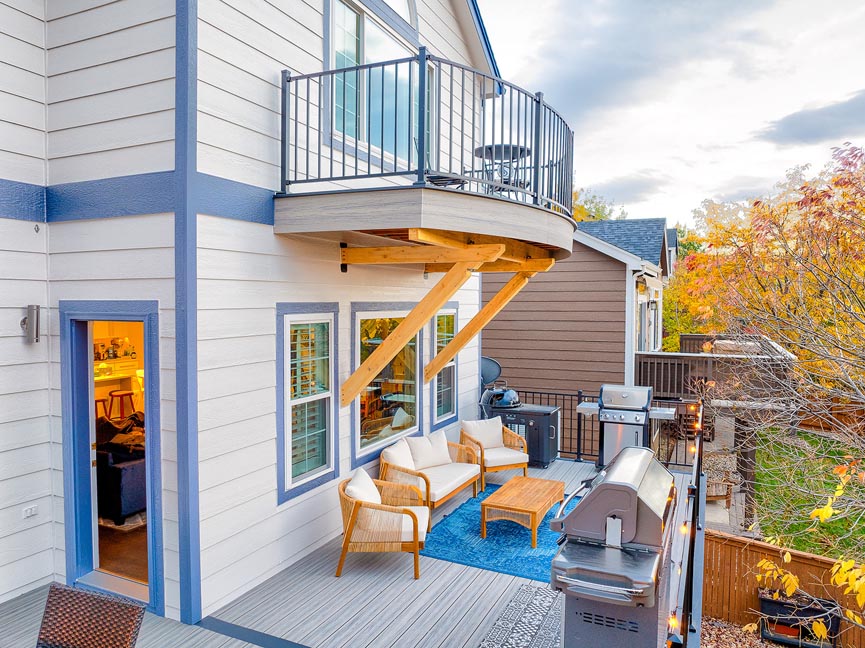
Jefferson County publishes its own guidance on the subject. The county maintains a designated dipping bedrock area guide and includes geologic hazard layers in its public interactive mapping application, allowing property owners to see whether their parcel falls within a mapped area of concern.
The 2026 season has produced a pronounced version of the cycle those agencies describe. Colorado entered a statewide drought emergency in June, and the Front Range recorded one of its hottest and driest Julys on record before monsoon moisture returned later in the summer. Extended drying followed by rapid saturation is precisely the sequence that drives the swelling and shrinking documented in the survey’s published material.
Foothills terrain intensifies the effect rather than moderating it. Colorado Geological Survey material notes that where claystone layers turn up on end near the foothills, swelling becomes more pronounced and produces what the agency terms heaving bedrock. Ground that has dried and cracked through a long summer can absorb returning moisture unevenly, creating expansion in one pocket while an adjacent pocket remains dry. Uneven pressure of that kind acts on anything embedded in the ground, and the effect accumulates across seasons rather than appearing all at once.
Jonathan Moeller, owner of Colorado Custom Covers and Decks, said footing work in this terrain begins before any design is drawn.
“The first thing that happens on a foothills lot is an on-site assessment, because the ground varies from one property to the next and sometimes across a single yard,” Moeller said. “Where the rock will not take a helical pier, we hand dig, and the footing gets sized to the conditions rather than to a standard specification.”
The company sets caissons measuring roughly 30 inches by 30 inches by 36 inches on sites that call for them, with footings carried to frost depth. Sloped ground, exposed rock, and the depth at which competent material is encountered all influence placement. That variability is the reason the site assessment precedes the design phase rather than following it, and it is also why two neighboring properties in the same subdivision can require different approaches to the same size of structure.
Drainage carries equal weight in the equation. Water that collects against a footing keeps the surrounding soil in a wetted state for longer than the surrounding ground, extending the period during which that material is expanded. Over repeated seasons, water routed toward a structure rather than away from it works against the lateral support a footing depends on. Site grading and footing placement are handled during the design phase for that reason, before any construction begins.
The framing carried above the footings is subject to the same forces. Small, repeated ground movement transfers upward through posts into the structure, which is one reason the connection between footing and post receives attention during construction rather than being treated as a routine detail.
Colorado State University Extension has published guidance on landscaping around structures in areas with swelling soils, noting that grading a site so water drains away from the structure is a foundational step. The principle applies equally to decks, patios, and covered structures, all of which sit on ground subject to the same seasonal moisture behavior as the house they adjoin.
Moeller said the practical guidance for property owners is observational rather than technical.
“Walk the property after a melt or a heavy storm and see where the water actually goes and where the ground stays soft,” he said. “That tells a builder more about a lot than any drawing does. Most people decide they want a deck in June, when the yard looks its best and tells them the least.”
Property owners seeking further reading on soil and site conditions in foothills terrain can consult published material from the Colorado Geological Survey, Colorado State University Extension, and Jefferson County.
Colorado Custom Covers and Decks is a locally owned builder of residential and commercial decks, patios, and covered structures serving Morrison and the Denver foothills. The company is a Deckorators Certified Elite builder, a ProWood Ambassador, and a NADRA national award winner in 2022, 2023, 2024 and 2025.
###
For more information about Colorado Custom Covers and Decks, contact the company here:
Colorado Custom Covers and Decks
Jonathan Moeller
+17206066161
j.moeller@coversanddecks.com
Plateau Cir, Morrison, CO 80465, United States


