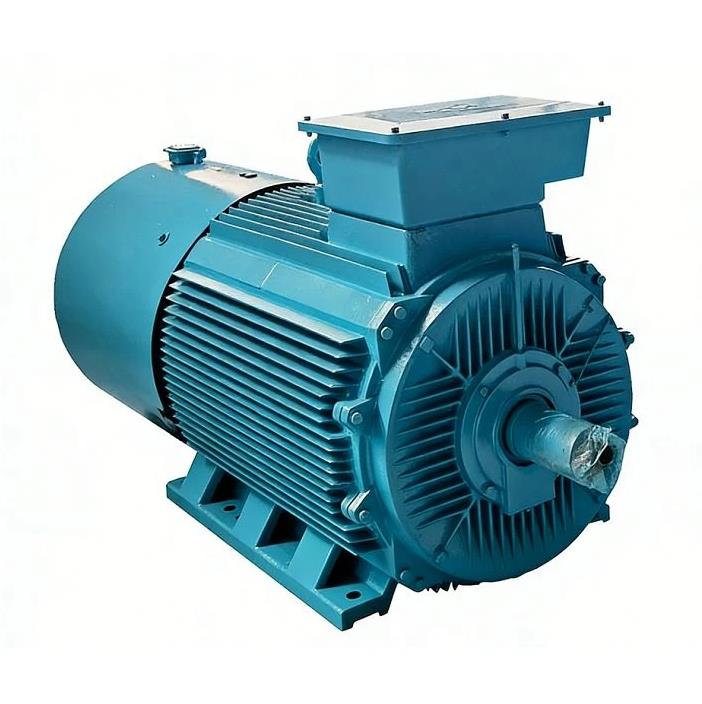
SHENYANG, LIAONING, CHINA, October 19, 2026 /EINPresswire.com/ — Shenyang Electric Machine Manufacturing Co., Ltd. is strengthening its presence in the industrial motor sector through a broad portfolio of electric drive products designed for demanding manufacturing and infrastructure applications. As industries seek reliable power transmission, improved energy utilization, and stable equipment operation, asynchronous motors remain essential components in systems ranging from pumps and fans to compressors, crushers, and heavy industrial machinery. Alongside its asynchronous motor offerings, the company manufactures Synchronous Motor and Wound Motor products, providing industrial customers with different drive technologies to match specific operating requirements.
Electric motors are central to modern industrial production because they convert electrical energy into mechanical motion. Their performance can influence equipment availability, production efficiency, maintenance schedules, and overall operating costs. For factories and industrial facilities, motor selection involves more than nominal power. Voltage, speed, torque, starting conditions, load characteristics, cooling arrangements, environmental conditions, and control requirements all affect the suitability of a motor for a particular application.
Shenyang Electric Machine Manufacturing Co., Ltd., operating under the CNDK brand, specializes in the research, development, manufacturing, and sales of large and medium-sized high-voltage, medium-voltage, and low-voltage electric motors, as well as complete equipment solutions. According to its company profile, the business has more than 70 years of experience in motor manufacturing. Its product portfolio covers asynchronous motors, synchronous motors, wound rotor motors, and specialized motor series for industrial applications. The company also describes services extending from design and production to installation guidance, commissioning, maintenance, repair, and equipment upgrades.
Asynchronous Motors for Industrial Applications
Asynchronous motors, also known as induction motors, are widely used in industrial drive systems because of their practical design and broad application range. They operate through electromagnetic induction: the stator produces a rotating magnetic field, which induces current in the rotor and generates torque. The rotor typically operates at a speed slightly below the synchronous speed of the rotating magnetic field, with the difference known as slip.
This operating principle makes asynchronous motors suitable for many applications requiring continuous mechanical power. Common uses include pumps, fans, compressors, conveyors, crushers, mills, and general manufacturing equipment. Depending on the design, voltage class, power rating, and control system, induction motors can support both conventional industrial installations and more demanding heavy-duty operations.
Shenyang Electric Machine Manufacturing Co., Ltd. lists several asynchronous motor families, including high-efficiency induction motors, variable-frequency drive motors, mill-duty motors, and motors designed for particular operating environments. The company’s published product categories include models intended for high-power applications, speed control, and industrial equipment with demanding load characteristics. This range gives customers options to consider when selecting motors for different machines and production processes.
High-efficiency motor designs can help reduce electrical losses during operation. However, the energy savings achievable in a real installation depend on the motor’s efficiency, loading profile, operating hours, control strategy, and the performance of the driven equipment. A correctly sized motor operating near its intended duty point can be more effective than an oversized unit that frequently runs under light load. For facilities with long operating hours, comparing lifecycle costs can provide a more useful basis for purchasing decisions than considering initial price alone.
Variable-frequency drive (VFD) motors provide another option for applications requiring adjustable speed. A compatible drive can vary the electrical frequency supplied to the motor, allowing speed and torque to be managed according to process demand. This capability can be useful in pumping, ventilation, material handling, and other systems where the required output changes over time. Successful implementation depends on selecting a motor and drive combination that is compatible with the load, control strategy, insulation requirements, and operating environment.
Industrial motors must also be matched to their installation conditions. Dust, humidity, corrosive atmospheres, temperature variation, and vibration can influence enclosure selection, cooling design, insulation, and maintenance requirements. For mining, metallurgy, cement production, and chemical processing, these considerations can be particularly important because equipment may operate under continuous or heavy-duty conditions.
Synchronous Motor Solutions for Precision and High-Power Drives
Synchronous motors form another important part of Shenyang Electric Machine Manufacturing Co., Ltd.’s product portfolio. Unlike asynchronous motors, synchronous motors operate at a speed synchronized with the frequency of the supplied electrical power, provided they are operating within their designed conditions. Their characteristics make them suitable for selected industrial applications that require stable operating speed or specific power and torque capabilities.
Large synchronous motors are used in various heavy industrial systems, including mills, compressors, pumps, and other high-power equipment. Their suitability depends on factors such as load profile, starting requirements, speed characteristics, excitation arrangements, and the wider electrical system. In some installations, synchronous motors can also provide power-factor control through adjustment of excitation, helping facilities manage reactive power under suitable operating conditions.
The company lists synchronous motors among its main product categories and highlights experience in high-power industrial motor manufacturing. Its published information describes a broad range of voltage and power capabilities across its motor portfolio, with specifications varying by series and configuration. Buyers should review individual technical datasheets to confirm the rated voltage, output, speed, cooling method, insulation class, and other requirements for a proposed installation.
In applications such as mining and cement production, the driven equipment may place substantial demands on the motor during startup and normal operation. A large mill, for example, may require a drive system capable of handling significant inertia and varying mechanical loads. Selecting a suitable motor involves evaluating starting torque, acceleration time, load characteristics, and the interaction between the motor and its control equipment.
Synchronous motor systems can be more complex than some conventional induction motor arrangements, particularly when excitation equipment and specialized starting methods are required. For this reason, buyers should assess the entire drive system rather than treating the motor as an isolated component. Compatibility with switchgear, protection systems, control equipment, and site electrical infrastructure is essential for safe and reliable operation.
Wound Motor Technology for Demanding Loads
Wound Motor products provide another solution for industrial applications that require particular starting or speed-control characteristics. In industrial terminology, wound rotor motors are a type of asynchronous motor in which the rotor contains windings connected through slip rings. This arrangement allows external resistance to be introduced into the rotor circuit during startup, which can help increase starting torque and limit starting current under appropriate conditions.
Wound rotor motors have traditionally been used in applications involving high inertia, heavy starting loads, or equipment that requires controlled acceleration. Examples can include certain crushers, mills, conveyors, and other large industrial machines. The exact suitability depends on the load, operating cycle, control design, and maintenance requirements.
Shenyang Electric Machine Manufacturing Co., Ltd. lists wound rotor motors among its industrial motor products. Its published catalog includes YR-series wound rotor motors and related configurations designed for different cooling and installation requirements. The company also presents specialized motors for mill-duty applications and other industrial equipment, reflecting the varied drive requirements found in heavy manufacturing.
The ability to manage starting characteristics can be valuable when a machine must accelerate a large mechanical load. However, the complete starting system needs to be engineered for the intended duty. External rotor resistance, switching equipment, control logic, and thermal limits all affect performance. Buyers should confirm the required starting torque, starting current, acceleration time, and expected number of starts per hour with the motor supplier and system designer.
Wound rotor motors also have specific maintenance considerations. Slip rings, brushes, and associated components may require inspection and service, depending on the design. The maintenance plan should account for the installation environment, operating hours, and manufacturer’s recommendations. Comparing wound rotor solutions with modern VFD-controlled induction motors may be worthwhile when evaluating a new project or upgrading existing equipment.
Manufacturing Capabilities and Technical Customization
Industrial motor manufacturing involves multiple engineering and production stages, including electromagnetic design, mechanical construction, winding, rotor assembly, insulation, machining, balancing, testing, and final inspection. The requirements vary according to the motor’s power, voltage, speed, application, and environmental conditions. Consistency across these stages is important because a motor may need to operate for extended periods in an industrial system where unplanned downtime can disrupt production.
Shenyang Electric Machine Manufacturing Co., Ltd. describes its manufacturing capabilities as covering large and medium-sized motors across high-, medium-, and low-voltage categories. Its company profile reports dozens of product series and thousands of specifications, with voltage coverage from 380 V to 13.8 kV and power ratings from 11 kW to 20 MW. These are company-published portfolio figures; the available range for an individual product should be confirmed through the relevant technical documentation.
Customization is often necessary because industrial facilities have different installation dimensions, load profiles, electrical systems, and operating environments. A motor may need to match an existing foundation, shaft height, coupling, mounting arrangement, cooling system, or control scheme. In other cases, customers may require specialized winding arrangements, enclosure protection, or performance characteristics suited to a particular machine.
The company describes customer-oriented design and development services, along with product manufacturing and drive-system integration. Such services can be useful when customers are developing new machinery, replacing older motors, or modifying equipment for changed operating conditions. A successful customized project requires detailed communication about the driven machine, load characteristics, site conditions, and acceptance criteria before manufacturing begins.
Quality verification is another important consideration. Depending on the motor type and specification, testing may include electrical checks, insulation assessments, winding resistance measurements, vibration measurements, mechanical inspections, and performance testing. Buyers should confirm which tests are included in the supplier’s standard procedure and which require special arrangements. Technical documentation and test records can support installation, commissioning, and future maintenance.
Lifecycle Services and Industrial Reliability
For industrial operators, a motor’s value extends beyond its initial purchase. Installation quality, commissioning, maintenance, repair, and access to replacement components can influence operating life and total ownership costs. A supplier that supports several stages of the equipment lifecycle may help customers coordinate technical questions and maintenance planning.
Shenyang Electric Machine Manufacturing Co., Ltd. describes a service portfolio that includes on-site installation, commissioning guidance, use and maintenance support, equipment repair, and upgrades or retrofitting. Its published information also refers to assistance with product selection and drive-control compatibility. These services address the practical requirements of customers integrating motors into existing industrial systems.
Before installation, the motor should be checked against the mechanical and electrical requirements of the application. Alignment, foundation condition, coupling arrangement, grounding, protective devices, ventilation, and cable connections all contribute to safe operation. Commissioning procedures should follow the manufacturer’s documentation and relevant electrical and workplace safety requirements.
Preventive maintenance can help identify issues before they cause unexpected shutdowns. Depending on the motor design and operating environment, maintenance may include inspecting bearings, checking lubrication, monitoring vibration and temperature, verifying cooling passages, and examining electrical connections. Motors operating in dusty or high-temperature environments may require more frequent attention than units in cleaner and more controlled locations.
Upgrades and retrofitting can also be relevant when production needs change or existing equipment becomes difficult to maintain. A replacement motor must be evaluated for more than rated power alone. Speed, torque, starting characteristics, efficiency, mounting dimensions, cooling, and drive compatibility may all differ between the original and replacement designs. A structured engineering review can help determine whether a direct replacement is practical or whether associated equipment changes are required.
Applications Across Heavy Industry and Infrastructure
Industrial electric motors support production across mining, metallurgy, building materials, power generation, water utilities, air separation, and energy and chemical processing. In these sectors, motors drive equipment such as pumps, fans, compressors, crushers, conveyors, mills, and other machinery essential to continuous operations.
Shenyang Electric Machine Manufacturing Co., Ltd. identifies these sectors among the industries served by its motor portfolio. The company’s broad range of asynchronous, synchronous, and wound rotor motor products reflects the need for different drive characteristics across industrial applications. A mine may require a motor designed for heavy loads and demanding operating conditions, while a water utility may prioritize stable pump operation and energy use over long operating periods.
In building materials production, large motors can drive mills, crushers, and material handling equipment. Metallurgical facilities may require drives for fans, pumps, rolling equipment, and other process machinery. Power plants and energy facilities depend on motor-driven auxiliary systems that support cooling, ventilation, fluid movement, and other operating functions. Each application requires an engineering assessment of the mechanical load and electrical supply.
As industrial operators seek to improve energy management and equipment reliability, motor selection increasingly involves evaluating the complete drive system. The motor, control equipment, mechanical load, transmission components, and operating schedule interact to determine overall performance. Reviewing these elements together can help buyers identify opportunities for more suitable equipment selection, improved control, and more effective maintenance.
Shenyang Electric Machine Manufacturing Co., Ltd. continues to serve this market through its portfolio of asynchronous motors, Synchronous Motor products, and Wound Motor solutions. Its focus on industrial motor manufacturing, customization, and lifecycle services provides a basis for customers to evaluate drive systems against the technical requirements of their applications.
About Shenyang Electric Machine Manufacturing Co., Ltd.
Shenyang Electric Machine Manufacturing Co., Ltd., operating under the CNDK brand, is a China-based manufacturer specializing in the research, development, production, and sales of large and medium-sized electric motors and related equipment. Located in Shenyang, Liaoning Province, the company states that it has more than 70 years of motor manufacturing experience and serves industrial customers across sectors including mining, metallurgy, building materials, power plants, water utilities, air separation, and energy and chemical processing.
Its product portfolio includes asynchronous motors, synchronous motors, wound rotor motors, high-efficiency induction motors, variable-frequency drive motors, and specialized motors for heavy industrial applications. The company also describes lifecycle services covering design and development, manufacturing, installation guidance, commissioning, maintenance, equipment repair, and upgrades.
According to its published company profile, its products are supplied throughout China and exported to more than 40 countries and regions. For further information about motor series, technical specifications, customized solutions, and service capabilities, buyers can visit www.cndk-en.com. Through its industrial motor portfolio and lifecycle support services, Shenyang Electric Machine Manufacturing Co., Ltd. aims to provide drive solutions for a wide range of industrial operating requirements.
Address: No. 24, Kaifa 24th Road, Shenyang, Liaoning Province, China, 110142
Official Website: https://www.cndk-en.com/
David
Shenyang Electric Machine Manufacturing Co., Ltd.
cndk@cndk-cn.com
Legal Disclaimer:
EIN Presswire provides this news content “as is” without warranty of any kind. We do not accept any responsibility or liability
for the accuracy, content, images, videos, licenses, completeness, legality, or reliability of the information contained in this
article. If you have any complaints or copyright issues related to this article, kindly contact the author above.

Media gallery