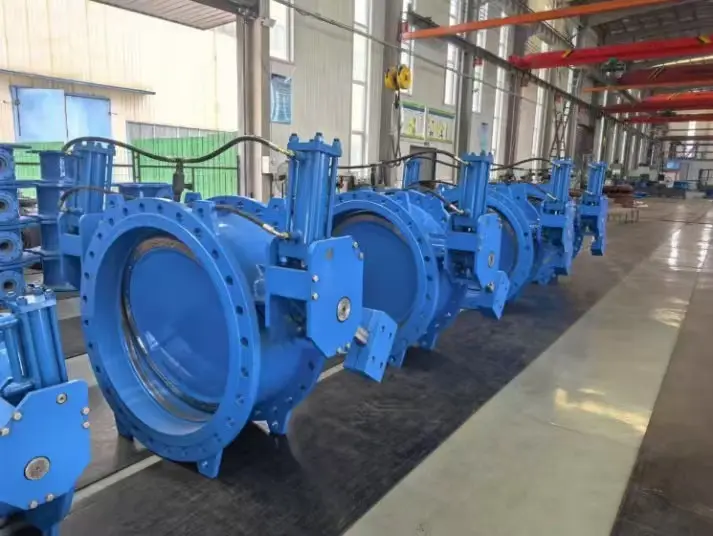
ZHENGZHOU, HENAN, CHINA, October 23, 2026 /EINPresswire.com/ — Underneath the bustling streets of modern metropolises, massive volumes of municipal water, wastewater, and stormwater flow through hundreds of miles of complex pipeline network every second. A sudden power outage at a regional pumping station can instantly stop a high-capacity pump, sending millions of gallons of water rushing backward in milliseconds. This severe hydraulic phenomenon, known as water hammer, creates localized pressure surges capable of bursting pipeline walls, shearing structural mounts, and destroying multi-million-dollar pumping systems in an eye-blink.
Engineers and project managers designing modern urban fluid systems face an increasingly difficult challenge: balancing continuous operation, long-term energy efficiency, and total system protection under unpredictable hydraulic demands. Navigating these challenges requires partnering with a Professional Check Valve Solutions Provider that understands both fluid mechanics and the complex engineering requirements of large-scale public utilities.
I. The Unique Procurement Logic of Municipal Infrastructure
Procuring valves for municipal infrastructure follows a distinctly different operational logic than standard industrial or commercial equipment acquisition. Industrial facilities can often schedule frequent maintenance turnarounds or replace standard off-the-shelf components with minimal downtime impact. In sharp contrast, municipal water networks, sewage treatment facilities, and urban drainage networks operate continuously, often for decades, as critical public lifelines.
Municipal procurement teams evaluate fluid control equipment through three main factors:
Hydraulic Reliability Under Peak Loads: Equipment must perform flawlessly during peak flood events, extreme pressure spikes, and power interruptions without requiring manual intervention.
Extended Service Lifespan: Infrastructure installations expect operating lifespans of 30 to 50 years, making premature valve fatigue or material breakdown acceptable only at severe public cost.
Low Dynamic Loss and Energy Consumption: Pumping operations account for a massive portion of municipal utility energy budgets. Valves with high pressure drop coefficients directly translate into higher electricity costs across decades of continuous service.
Standard commercial off-the-shelf valves frequently fail to satisfy these municipal demands because they lack custom hydraulic damping, robust sealing mechanisms, and corrosion resistance tailored to specific flow media.
II. Pumping Pain Points and Technical Solutions
Engineers encounter recurring technical pain points during the design and operation of municipal water installations. Identifying these vulnerabilities early enables engineering teams to specify proper check valve configurations:
1. Water Hammer Shock waves
When reverse flow strikes a slow-closing disc, the sudden deceleration converts kinetic energy into massive pressure spikes.
Technical Solution: Implementing non-slam dynamic closure designs. By utilizing balanced disc geometries, counterweights, or internal hydraulic dampers, the valve closes swiftly at the precise moment of zero flow velocity, preventing fluid reversal before pressure waves develop.
2. High Head Loss and Pumping Inefficiency
Conventional swing check valves often maintain a restricted flow area, creating internal turbulence and flow resistance. Over years of continuous pumping, this energy loss accumulates into substantial operating overhead.
Technical Solution: Streamlined internal flow passage design. Selecting advanced valve geometries, such as a tilting disc check valve, opens up full-bore flow passages, dramatically reducing the drop in pressure across the valve body and optimizing overall pump efficiency.
3. Media Corrosion and Debris Jamming
Municipal raw water and wastewater contain high concentrations of abrasive particulates, mineral deposits, and corrosive chemical compounds that cause disc seizure, body tuberculation, or seal degradation.
Technical Solution: Application of specialized epoxy coatings, stainless steel or bronze alloy trim materials, and non-clogging pivot point structures that prevent debris accumulation and maintain smooth disc movement.
III. Municipal Valve Supplier Evaluation Checklist
Selecting a qualified supplier requires verifying core manufacturing metrics, technical qualifications, and field track records. Project managers can use this technical checklist during vendor evaluation:
In-House Manufacturing and Precision Machining Capability: Does the manufacturer control casting quality, precision machining, and non-destructive testing internally to ensure structural integrity?
Advanced Computational Fluid Dynamics (CFD) Capabilities: Can the vendor perform flow simulation and dynamic hydraulic calculations to tailor valve closure speeds to specific pipeline profiles?
Compliance with International Quality Standards: Does the supplier hold ISO 9001 quality management certifications and international product approvals relevant to potable water and municipal applications?
Proven Track Record in Major Utility Projects: Has the company supplied large-diameter valves (DN1000 and above) for major municipal water transmission and treatment plants?
Global Service Network and After-Market Support: Is there a comprehensive global sales and technical service framework capable of assisting with installation, commissioning, and long-term maintenance?
IV. Manufacturing Strength and Technical Innovation
Fulfilling these rigorous municipal engineering standards requires a manufacturer backed by substantial production capacity and deep industry experience. NST (formerly ZD), operated under Newstar Valve (Zhengzhou) Co., Ltd., represents a leading developer, manufacturer, and aftermarket service provider of comprehensive flow management products in China. Located in Zhengzhou, Henan Province, the company has established a major presence across municipal fluid control sectors.
In the Chinese water treatment industry, the NST brand holds a premier position, occupying more than 40% market share for butterfly valves in domestic municipal water treatment applications. This extensive market footprint reflects decades of focus on engineering refinement, material quality, and reliable sealing technologies under demanding operating conditions.
To support complex engineering projects globally, Newstar Valve has established a comprehensive sales and service network covering virtually all capital cities and municipalities across China. Beyond its domestic presence, the company has expanded its international footprint, establishing dedicated sales and technical organizations across the USA, Germany, Italy, the Middle East, Africa, and Central Asia. This global reach ensures that municipal contractors receive responsive lifecycle support, engineering consultation, and prompt spare parts availability worldwide.
Through continuous research and development, Newstar Valve integrates advanced hydraulic design into every product family. By combining heavy-duty construction with optimized hydrodynamics, their check valve solutions deliver reliable reverse-flow prevention while minimizing structural strain on connected infrastructure.
V. Total Cost of Ownership (TCO) and Municipal Value
In municipal infrastructure, initial purchase price represents only a fraction of a valve’s lifetime cost. Evaluating equipment strictly through upfront capital expenditure often leads to higher long-term expenditure caused by frequent seal replacements, high energy losses, and unscheduled maintenance shutdowns.
A true Total Cost of Ownership calculation evaluates three core phases:
Evaluating TCO across the complete product lifecycle highlights key operational divisions:
CAPEX (Initial Capital Cost): Initial purchase and installation cost (10-15% of total lifecycle cost).
OPEX (Lifetime Energy Cost): Cumulative electricity consumption from pressure drop head loss (60-70% of total lifecycle cost).
Maintenance & Reliability: Periodic maintenance, spare parts, and downtime protection (15-25% of total lifecycle cost).
By specifying professionally engineered check valves with optimized hydraulic profiles, municipal authorities substantially reduce friction loss, lowering pump power consumption over decades of continuous operation. Furthermore, durable sealing materials and robust damping mechanisms prevent catastrophic water hammer events, protecting surrounding pipeline assets from premature failure.
For municipal engineers, utility managers, and EPC contractors seeking to upgrade existing water transmission facilities or design next-generation municipal pumping stations, engineering experts can review your system parameters-including flow rates, pipe diameters, working pressures, and media characteristics-to recommend a tailored flow control solution.
To explore detailed technical specifications, product dimensions, and municipal engineering case studies, visit the official website at https://www.nstvalves.com/
NST
NST
Legal Disclaimer:
EIN Presswire provides this news content “as is” without warranty of any kind. We do not accept any responsibility or liability
for the accuracy, content, images, videos, licenses, completeness, legality, or reliability of the information contained in this
article. If you have any complaints or copyright issues related to this article, kindly contact the author above.

Media gallery