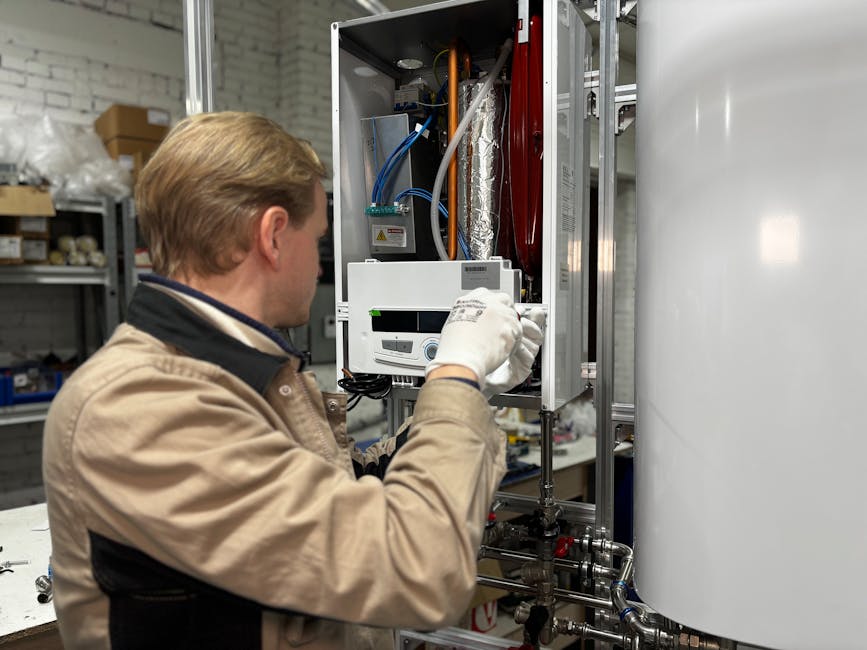
***Google query: Is it cheaper to repair or replace my water heater?***
Key Takeaways
- Water heater repairs in Alabama typically cost $150-$700, with minor issues like thermostat adjustments at the lower end and major component failures reaching the higher range.
- Apply the 50% Rule when deciding: if repair costs exceed 50% of a new unit’s price and your water heater is over eight years old, replacement becomes the smarter financial choice.
- Energy-efficient heat pump water heaters can save families of four approximately $550 annually while qualifying for federal tax credits up to $2,000 through December 2025.
- Warning signs like inconsistent temperatures, unusual noises, or rusty water often indicate your system needs professional attention before complete failure occurs.
- Professional assessment helps determine the most cost-effective solution based on your unit’s age, efficiency, and repair history rather than guessing.
When your morning shower turns unexpectedly cold, the immediate question becomes whether to repair your existing water heater or invest in a replacement. This decision impacts both your daily comfort and household budget, making it important to understand the factors that drive costs and influence the best choice for your situation.
Water Heater Repair Costs: $150-$700 Regional Range
Homeowners can expect water heater repair costs between $150 and $700, depending on the specific problem and service requirements. Minor repairs such as thermostat adjustments, pilot light relighting, or simple valve replacements typically fall on the lower end of this spectrum, often costing $150-$300. Major component failures involving heating element replacement, gas control valve issues, or tank leaks can reach $500-$700.
The regional cost structure reflects both local labor rates and the availability of parts for common water heater brands. Professional water heater services like Engle Services provide transparent pricing structures that help homeowners understand exactly what drives their repair costs.
Emergency service calls command premium rates, sometimes 25-50% higher than standard business hours. Weekend and holiday repairs can push costs toward the upper end of the range, making it worthwhile to address warning signs before they become urgent failures.
Warning Signs Your Water Heater Needs Professional Attention
Recognizing early warning signs prevents expensive emergency repairs and potential water damage. Most water heaters provide clear signals before complete failure, giving homeowners time to plan repairs or replacement strategically.
No Hot Water or Inconsistent Temperatures
Complete loss of hot water typically indicates heating element failure in electric units or gas supply issues in gas models. However, inconsistent temperatures often signal more complex problems. Fluctuating water temperature during a single shower suggests thermostat malfunctions, heating element issues, or broken dip tubes that allow cold water to mix prematurely with heated water.
Electric water heaters with heating element failures may produce insufficient or lukewarm water. Gas units experiencing problems may heat water slowly or fail to maintain consistent temperatures throughout the day.
Leaks, Rust, and Unusual Noises
Water pooling around the base often indicates internal tank corrosion or failing pressure relief valves. Small leaks from fittings may be repairable, but leaks from the tank itself typically necessitate replacement due to structural integrity concerns.
Rumbling, popping, or banging sounds—commonly called “kettling”—result from sediment buildup at the tank bottom. This sediment layer traps heat, causing water beneath it to boil and create steam bubbles that produce the characteristic noises. Left unchecked, this process damages the tank liner and reduces efficiency significantly.
Rusty or discolored hot water indicates internal tank corrosion or deteriorating anode rods. When rust appears only from hot water taps, the water heater is likely the source rather than distribution pipes.
The 50% Rule: When Repair Costs Signal Replacement
The 50% Rule provides a clear framework for repair-versus-replacement decisions. When repair costs exceed 50% of a new unit’s price, replacement typically offers better long-term value, especially for units over eight years old.
Age and Efficiency Thresholds
Traditional tank water heaters typically last 6-12 years with proper maintenance, while tankless units can exceed 20 years of service life. Units approaching 10 years old often experience declining efficiency and increased failure rates, making replacement more attractive even for moderate repair costs.
Calculate Your Break-Even Point
Calculate your break-even point by comparing total repair costs against replacement investment. Include potential future repairs, energy savings from newer models, and remaining warranty coverage. A unit requiring its second major repair within 12 months often warrants replacement regardless of individual repair costs.
What Drives Your Water Heater Repair Costs
Understanding cost drivers helps homeowners budget appropriately and avoid surprise expenses during repairs.
Unit Type and Problem Complexity
Tankless water heaters may require higher specialized service costs than traditional tanks for certain repairs due to complex electronics, heat exchangers, and specialized diagnostic equipment. Gas units may involve additional safety protocols and licensed gas work, increasing labor costs compared to electric models.
Problem complexity significantly impacts pricing. Simple thermostat adjustments cost substantially less than heating element replacement, which requires draining the tank and specialized electrical work. Issues involving corrosion, multiple component failures, or safety system malfunctions command higher rates due to increased labor time and parts requirements.
Emergency Service and Accessibility Factors
Unit accessibility directly affects labor costs. Water heaters located in cramped crawl spaces, attics, or utility closets require additional time for technicians to access components safely. Units surrounded by storage or blocked by other equipment may require preliminary work before repairs can begin.
Emergency service timing influences final costs significantly. After-hours, weekend, and holiday calls often carry surcharges reflecting technician availability and increased operational costs. Planning non-emergency repairs during business hours can reduce total service costs by 25-40%.
Energy-Efficient Replacement Benefits and Tax Credits
Modern water heaters offer substantial efficiency improvements over units manufactured even five years ago, creating opportunities for significant utility savings.
Heat Pump Water Heaters Save $550 Annually for Families of Four
ENERGY STAR certified heat pump water heaters can save households of four approximately $550-$600 annually compared to standard electric models. These units extract heat from surrounding air rather than generating heat directly, achieving efficiency ratings 2-3 times higher than conventional electric water heaters.
Heat pump water heaters work effectively in ambient temperatures above 40°F, making them suitable for most Central Alabama installations. Their efficiency is optimized in warmer ambient temperatures, leading to peak performance during summer months when ambient temperatures support optimal heat extraction.
Federal Credits: $2,000 for Heat Pumps
Federal tax credits provide substantial incentives for energy-efficient water heater installations through December 31, 2025. Heat pump water heaters qualify for 30% credit up to $2,000.
These credits apply to the total installation cost, including equipment and professional installation labor. Combined with utility rebates such as Alabama Power’s $600 rebate for heat pump water heaters, these incentives can significantly offset upgrade costs for qualifying systems.
Asking a Professional to Determine the Best Course of Action
Professional assessment by a water heater repair specialist provides objective analysis of repair costs, remaining lifespan, and efficiency considerations that homeowners cannot evaluate independently. Licensed technicians possess diagnostic equipment and experience to identify underlying problems that may not be apparent during visual inspection.
Qualified professionals can perform system evaluations including tank condition assessment, heating element testing, thermostat calibration, and efficiency measurements. This analysis provides accurate cost projections for both repair and replacement scenarios, enabling informed decision-making based on actual system condition rather than age alone.
Professional evaluation also considers factors such as household hot water usage patterns, local utility rates, available rebates, and installation requirements that impact long-term costs. This approach ensures homeowners choose the most cost-effective solution for their specific situation while avoiding premature replacement or costly repeated repairs.
Engle Services
40300 U.S. 280
Sylacauga
AL
35150
United States